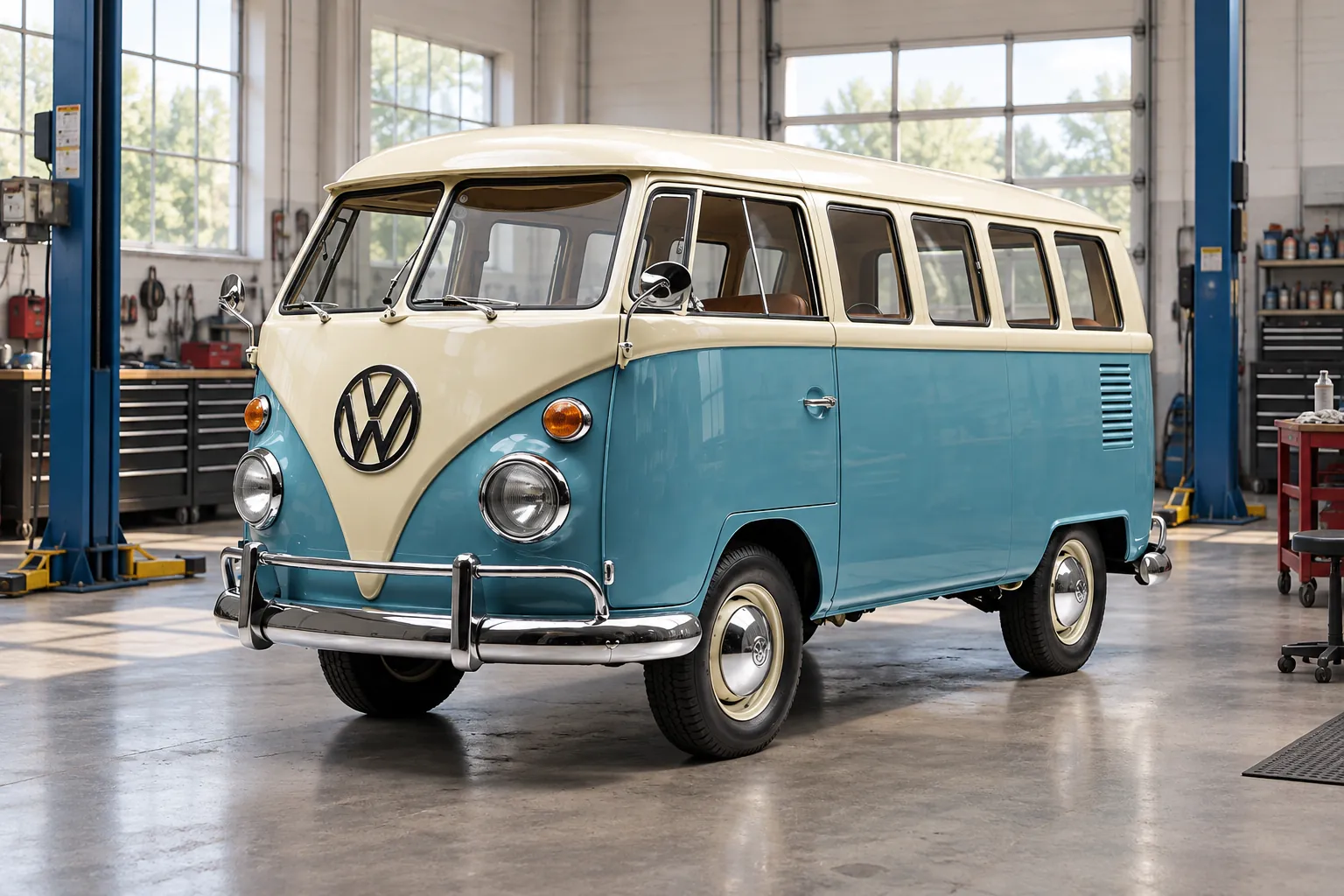
01 — Restored
Fully restored. Rust-free. Better than ever.
Restored bodywork, fresh paint and a renewed interior, brought together with modern hybrid power. The classic you love, rebuilt for the road ahead.

A classic Volkswagen Bus, reimagined with hybrid power. Plug in for everyday trips. Refuel for the road ahead.
Illustration for reference only. Vehicles are built to order; finish, trim and detail will vary.
Complete restored Bus with electric drive and an onboard gasoline generator. Optional upgrades are additional.
Tax, title and delivery are additional.
Restored bodywork, fresh paint and a renewed interior, brought together with modern hybrid power. The classic you love, rebuilt for the road ahead.
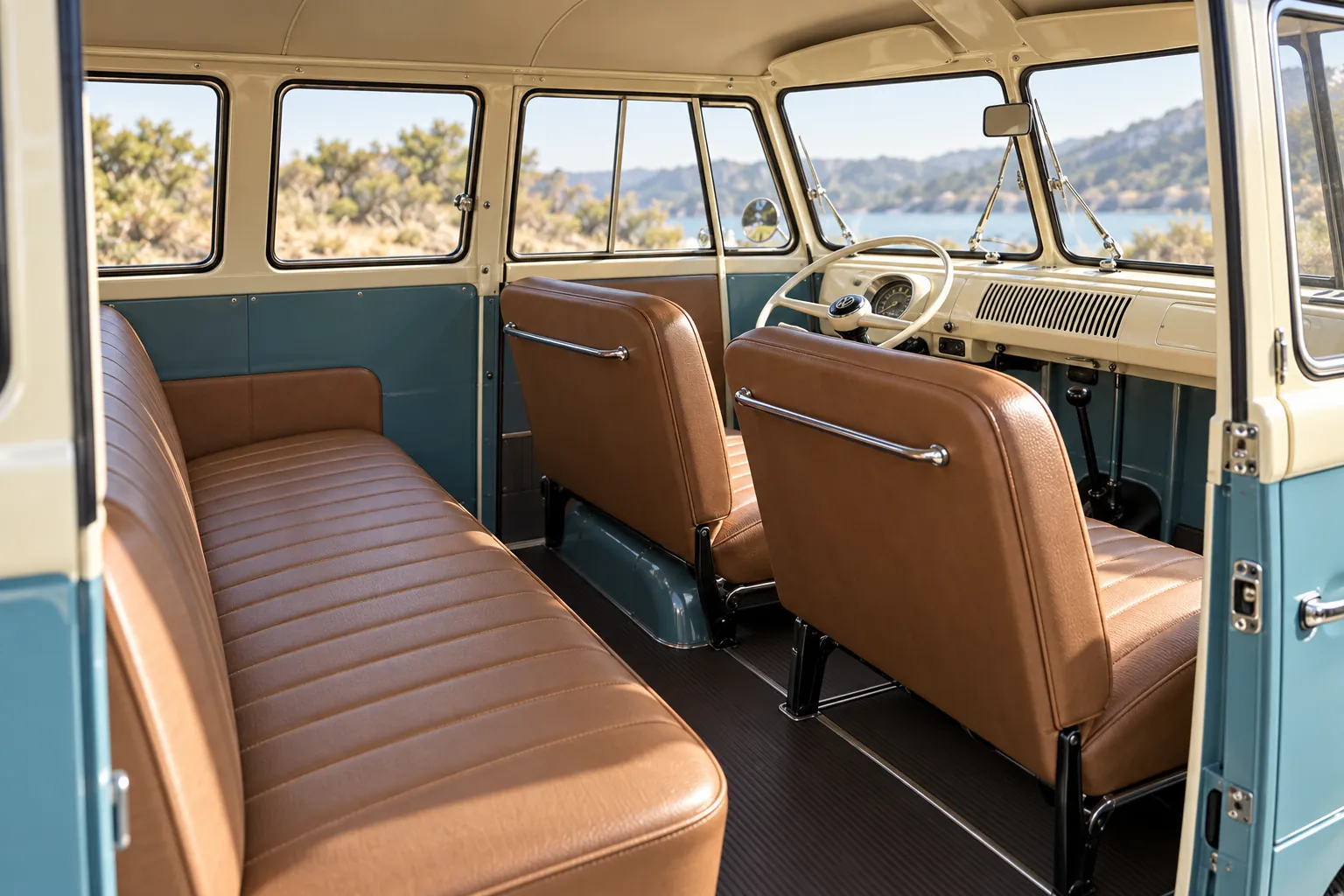
Custom paint and upholstery, true to the original VW style. A familiar dashboard with real knobs and switches. No oversized touchscreens.

Plug in at home for local trips. The onboard generator keeps longer journeys familiar.
It turns a generator. Everything that moves the bus is electric, so it pulls like an electric car and refuels at any pump in the country. Plug in for local electric driving; use the generator for longer trips.
Electric for power.
Duet combines plug-in driving for local trips with gasoline refueling for longer journeys. Here’s how range and roadside stops compare.
1965 split-window · Gasoline
2025 US model · Rear-wheel drive · Electric
Classic Volkswagen · Electric & Gas
Duet’s calculated total range is 415–475 miles at 55 mph, or 340–390 miles at 65 mph. Battery-only range at 65 mph is approximately 65–85 miles. Its figures are engineering estimates, not tested or EPA-rated range; the 12-gallon usable tank is a sizing assumption, not a finalized specification. These vehicles use different range methods, so this is not a same-route test. Gas stop times are planning estimates. All stop times exclude queues and detours.
Original Bus: Volkswagen’s 1965 owner’s manual lists approximately 250 miles from a 10.6 US gallon tank. Vehicle condition and driving conditions affect actual range.
ID. Buzz: VW’s US 2025 RWD specifications give 234 EPA-estimated miles.VW quotes 10–80% charging in 26 minutes under suitable conditions. The 164-mile figure is 70% of EPA range, not measured highway range. Charging speed varies with battery temperature, charge level, charger output and other conditions.
Duet: 36–40 kWh gross, 28.8–36 kWh usable, approximately 4,000 lb operating weight, Cd 0.45, 2.67 m² frontal area, 2 kW auxiliaries and level-road driving. The model uses 34–36% engine thermal efficiency while running, 94% generator efficiency, 89–93% electrical-to-wheel efficiency and 92% battery round-trip efficiency. At an illustrative 50 kW generation point, the engine runs about 58–60% of the time at 65 mph, supplying the motor and charging the battery, then stops. The exact Ford 1.5L operating point and these efficiencies have not been measured. Gasoline replenishes generator fuel, not battery charge. Plug-in replenishment of the usable battery window takes approximately 5–7 hours with the 6.6 kW charger and a suitable 240 V supply, allowing for charging losses. Wind, hills, heating, load and final hardware change these estimates.
Engine-efficiency assumptions are informed by EPA benchmarking of other EcoBoost engines, not a verified 1.5L map. Charge-and-stop operation is included in the calculation; engine-off time is not an additional range multiplier. These warm-operation scenarios do not quantify cold-start or restart overhead.
Paint, trim, wheels and accessories. The drivetrain is the same in every one — it is a specification, not a choice.
Tax, title and delivery are additional. Registering interest takes no payment and does not reserve a vehicle. Images are illustrations for reference only; finish, trim and detail will vary.